How Long Does Concrete Last in Texas? What Timberwood Park Homeowners Need to Know
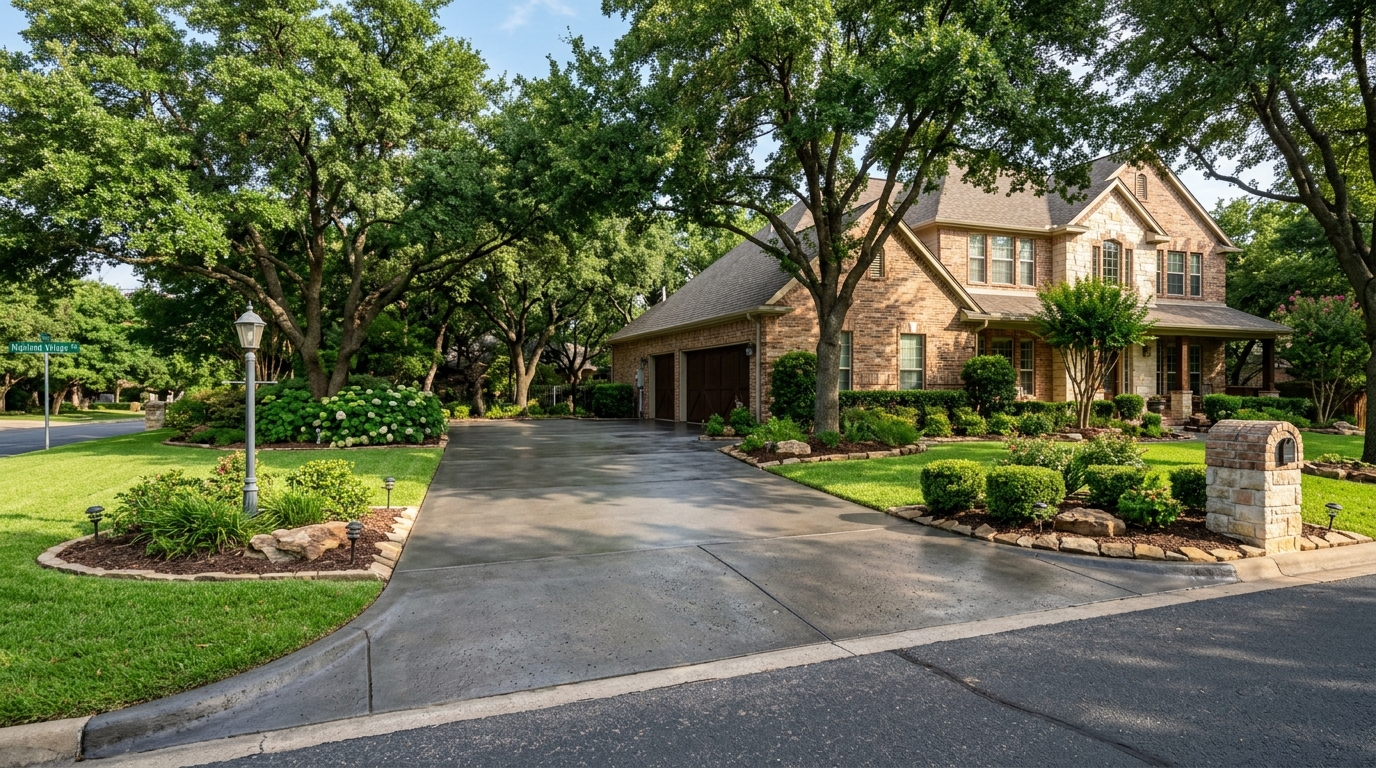
Homeowners considering a concrete driveway or patio in Timberwood Park often ask the same question: “How long will it actually last here?” The honest answer depends on several factors specific to this region — and it’s different from what you’d hear in a northern climate or a dry desert environment.
In this post, we’ll cover realistic concrete lifespan expectations for South Texas, the factors that shorten and extend that lifespan, and what a long-life maintenance schedule looks like.
Call (830) 289-3583 — Project RequestsRealistic Lifespan for Concrete in the San Antonio Area
With proper installation and maintenance, concrete in the Texas Hill Country area typically lasts 30–50 years for driveways and 25–40 years for patios and decorative flatwork.
That range is wide because the variables are real:
- Installation quality is the biggest single factor. A properly prepared 4” base with correct reinforcement (per Bexar County specs) dramatically outlasts a thin slab over uncompacted fill.
- Sealing history is the second biggest factor. Unsealed concrete in Texas climate typically shows significant deterioration within 10–15 years. Properly sealed concrete maintains integrity for 30+ years.
- Drainage determines whether the slab stays supported. Chronic water pooling beneath a slab undermines it faster than any other variable.
How Texas Climate Specifically Shortens Concrete Life
Triple-digit summer heat causes daily thermal expansion cycles. Over years, this concentrates stress at joints and edges. Slabs without adequate control joints — placed every 8–12 feet for most flatwork — develop uncontrolled cracking.
Sudden winter freezes are the most underappreciated concrete enemy in this region. Texas freeze-thaw events are less frequent than northern states but more sudden — 30–40°F drops in 24 hours. Water in pores and cracks freezes, expands 9%, and opens new channels for the next freeze cycle. See our post on Texas weather and concrete damage for the full breakdown.
Expansive clay soil in Bexar County swells with seasonal rain and shrinks in drought. This creates vertical movement that differentially stresses the slab — one section lifts while an adjacent section doesn’t. Post-tension slab construction handles this better than standard rebar in high-movement soil areas.
Factors That Extend Concrete Life
Regular sealing. A penetrating concrete sealer applied every 2–3 years is the highest-ROI maintenance activity a Texas homeowner can perform. It reduces water infiltration (freeze-thaw protection), UV-related discoloration, and oil staining. Cost: $200–$600 per treatment for a typical driveway.
Proper drainage maintenance. Keep water flowing away from the slab perimeter. Re-grade soil that has settled against the slab edge. Clean channel drains annually.
Prompt crack repair. Small cracks sealed immediately stay small. Small cracks left alone become structural problems within 1–3 freeze seasons. Polyurethane crack filler is a 20-minute DIY repair that can defer a $3,000–$6,000 resurfacing project for years.
Quality installation. This is where the investment matters most and can’t be undone. A properly compacted sub-base, correct reinforcement, and appropriate concrete mix design (including air-entrainment) are the foundation of a 40-year slab. A cut-corner installation may look identical at day one but fail at year five.
Get a Long-Life Installation QuoteMaintenance Timeline for Texas Concrete
| Year | Action |
|---|---|
| Year 0 | Professional installation with proper base and sealer |
| Year 1 | Visual inspection; fill any hairline cracks |
| Year 2 | Reseal if exposed to direct sun; inspect control joints |
| Year 3 | Reseal (all surfaces); check drainage |
| Year 5 | Professional assessment if any cracking or displacement noted |
| Every 2–3 years | Reseal |
| As needed | Crack repair, drainage correction |
This schedule — essentially a $200–$600 investment every 2–3 years — is the difference between a 30-year slab and a 15-year slab.
Frequently Asked Questions
Does concrete or asphalt last longer in Texas?
Concrete outlasts asphalt significantly in Texas heat. Asphalt softens and deforms in 100°F+ temperatures, requires resealing every 3–5 years, and typically needs replacement every 15–20 years. Concrete, properly maintained, lasts 30–50 years. The higher upfront cost typically pays back within 10–15 years.
Should I seal new concrete right away?
Yes, but timing matters. Most concrete contractors apply a cure-and-seal product immediately after finishing. The first post-installation sealer application (penetrating sealer, not film-forming) is typically recommended at 28–30 days, after the concrete has reached full cure. After that, every 2–3 years.
How do I know when my concrete is at end of life?
Widespread spalling (surface layer breaking up), multiple displaced cracks, rebar corrosion staining, or more than 25–30% of the surface area affected typically indicates replacement is more cost-effective than repair. Read our signs your driveway needs repair for a detailed breakdown.
Planning a long-life installation? Call (830) 289-3583 or contact us online.
Related posts: