Concrete Sealing in Texas: Why It Matters and How to Do It Right in Timberwood Park, TX
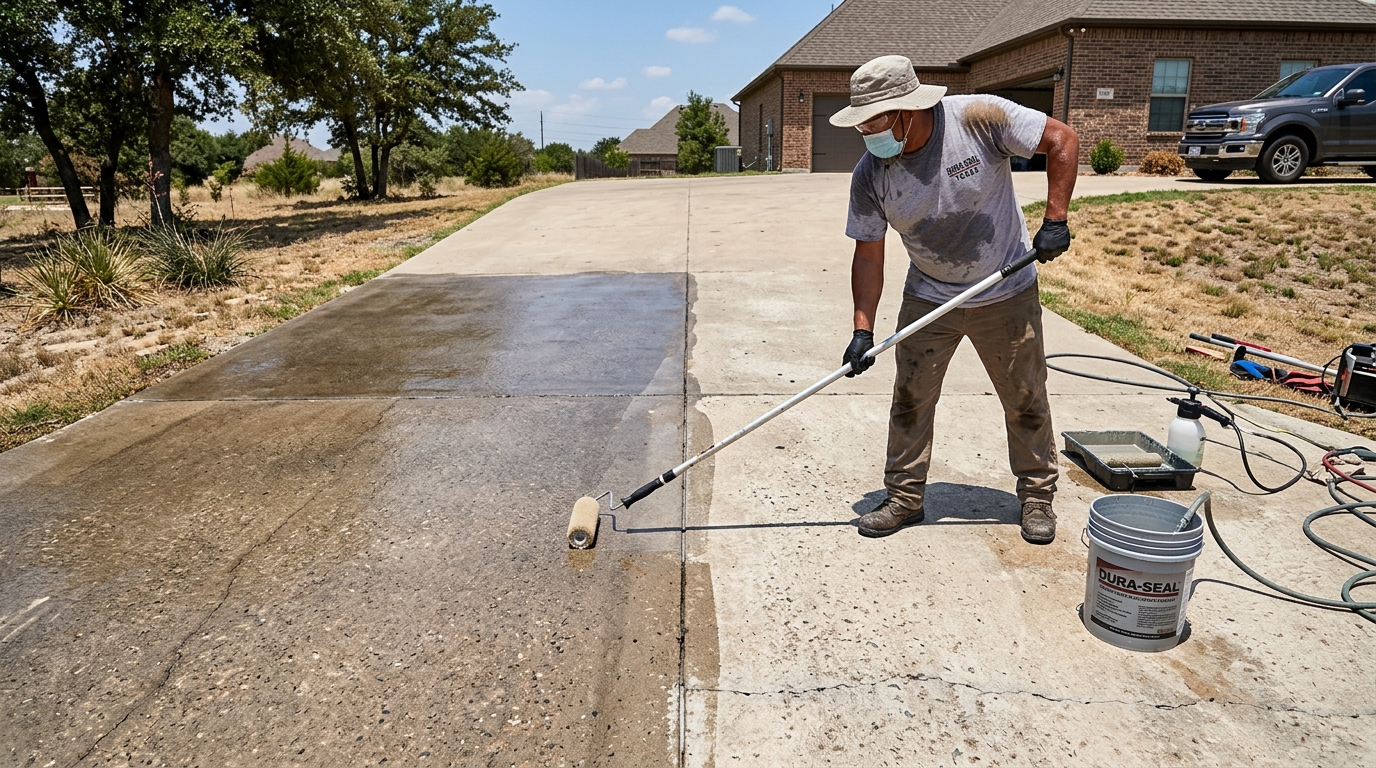
If you’ve invested in a concrete driveway or patio in Timberwood Park, sealing it isn’t optional — it’s the maintenance step that determines whether your slab lasts 20 years or 40 years. In Texas Hill Country’s climate, unsealed concrete deteriorates in predictable ways that regular sealing almost entirely prevents.
In this post, we’ll cover what concrete sealers do, the different product types, when and how to apply them in Texas conditions, cost ranges, and what happens when sealing is skipped.
Call (830) 289-3583 — Professional Sealing ServicesWhy Sealing Concrete Is Critical in the San Antonio Area
Concrete is naturally porous. In most climates, that porosity is a manageable issue. In Timberwood Park, it becomes a serious one because:
Water infiltration plus freeze events equals structural damage. Texas freezes are less frequent than up north, but they’re more sudden — and water that has infiltrated a porous, unsealed slab expands 9% when it freezes, creating internal hydraulic pressure that widens cracks and initiates new ones.
UV degradation bleaches and dries the surface. The San Antonio area’s high UV index breaks down the cement paste in the concrete surface over time, creating a powdery, weakened layer. UV-resistant sealers significantly slow this process.
Oil and organic staining is irreversible without sealer. Car oil, tree tannins from Timberwood Park’s mature oaks, fertilizer runoff — these stain porous concrete permanently. A sealed surface allows cleanup before penetration.
Types of Concrete Sealers
Penetrating Sealers (Silane/Siloxane) These absorb into the concrete pore structure and chemically react to create a water-repellent barrier from within. They don’t change the surface appearance and provide the best freeze-thaw protection. Best choice for driveways and outdoor flatwork that will be exposed to Texas freeze events. Lasts 3–5 years between applications.
Acrylic Film-Forming Sealers Sit on the surface and create a protective film. Available in matte, semi-gloss, and high-gloss finishes. Common on new decorative concrete and stamped work — they enhance color. Require reapplication every 1–3 years. More susceptible to peeling if applied over damp concrete or in high-humidity conditions.
Polyurethane and Epoxy Sealers Thicker film-forming products with higher abrasion resistance. Popular for garage floors and commercial flatwork. Less common for outdoor driveways and patios where breathability matters. Can trap moisture if applied to concrete that isn’t fully dry.
Cure-and-Seal Products Applied immediately after finishing a new pour to retain moisture during the cure period. Not the same as a maintenance sealer — these aren’t applied to existing slabs.
When to Seal: Texas-Specific Timing
New concrete: Wait 28–30 days after the pour for the concrete to reach full cure before applying a penetrating sealer. (Cure-and-seal products applied immediately after the pour by the contractor are separate.)
Existing concrete: Seal in fall (September–November) when temperatures are stable between 50–85°F. Avoid application in summer when the concrete surface can reach 120°F+ — sealer doesn’t bond properly to overheated surfaces.
How to know it’s time to reseal: Pour a small amount of water on the surface. If it beads up, the sealer is still effective. If it soaks in within 30 seconds, the sealer has worn through and it’s time to reapply.
Cost of Concrete Sealing in Timberwood Park
Professional application: $200–$600 for a typical driveway or patio (500–700 sq ft). Includes surface prep (cleaning, crack repair), product cost, and application.
DIY: $50–$150 in product cost for the same area. Requires pressure washing the surface first, filling cracks, and renting or owning a pump sprayer or roller.
Resealing frequency: Every 2–3 years for most Timberwood Park driveways. Direct-sun surfaces and areas with heavy traffic should be resealed every 2 years.
The math is straightforward: $200–$600 every 2–3 years in sealing cost versus $3,000–$7,000+ for driveway replacement in 15 years instead of 35 years.
Schedule Sealing or Get a Concrete EstimateWhat Happens When Concrete Is Not Sealed
Year 1–3: Surface looks fine. Minor UV bleaching begins in direct sun areas.
Year 3–7: Surface porosity allows oil and organic staining. Hairline cracks develop. Water infiltrates the pores.
Year 7–12: First major Texas freeze event after a wet period causes internal cracking. Surface begins to spall in exposed aggregate areas. Cracks widen.
Year 12–20: Multiple repair areas required. Resurfacing may be needed to restore appearance. The slab may still have structural life but will look and perform significantly worse than a maintained equivalent.
This timeline is accelerated compared to northern climates — Texas UV intensity and the freeze-thaw-clay combination compounds deterioration faster.
Frequently Asked Questions
Can I seal concrete myself in Texas?
Yes. The main risks are applying over damp concrete (causes trapping and bubbling in film-forming sealers), applying in high heat (over 85°F surface temperature), and using the wrong product type for the application. A penetrating silane/siloxane sealer is the most forgiving DIY option and provides excellent protection for driveways.
Does sealing concrete make it slippery when wet?
Film-forming sealers, particularly high-gloss acrylic, can reduce wet traction. For pool decks and outdoor patios, specify a low-sheen or anti-slip additive in the sealer. Penetrating sealers don’t change surface texture or traction.
How soon after new installation should I seal my driveway?
Wait 28–30 days for full cure. Sealing before the concrete has fully cured traps moisture that can weaken the slab. Your contractor may apply a cure-and-seal product immediately after the pour — this is a different product for a different purpose.
Ready to seal your concrete? Call (830) 289-3583 or request a sealing quote.
Related posts: