Concrete Maintenance Tips for Texas Homeowners in Timberwood Park, TX
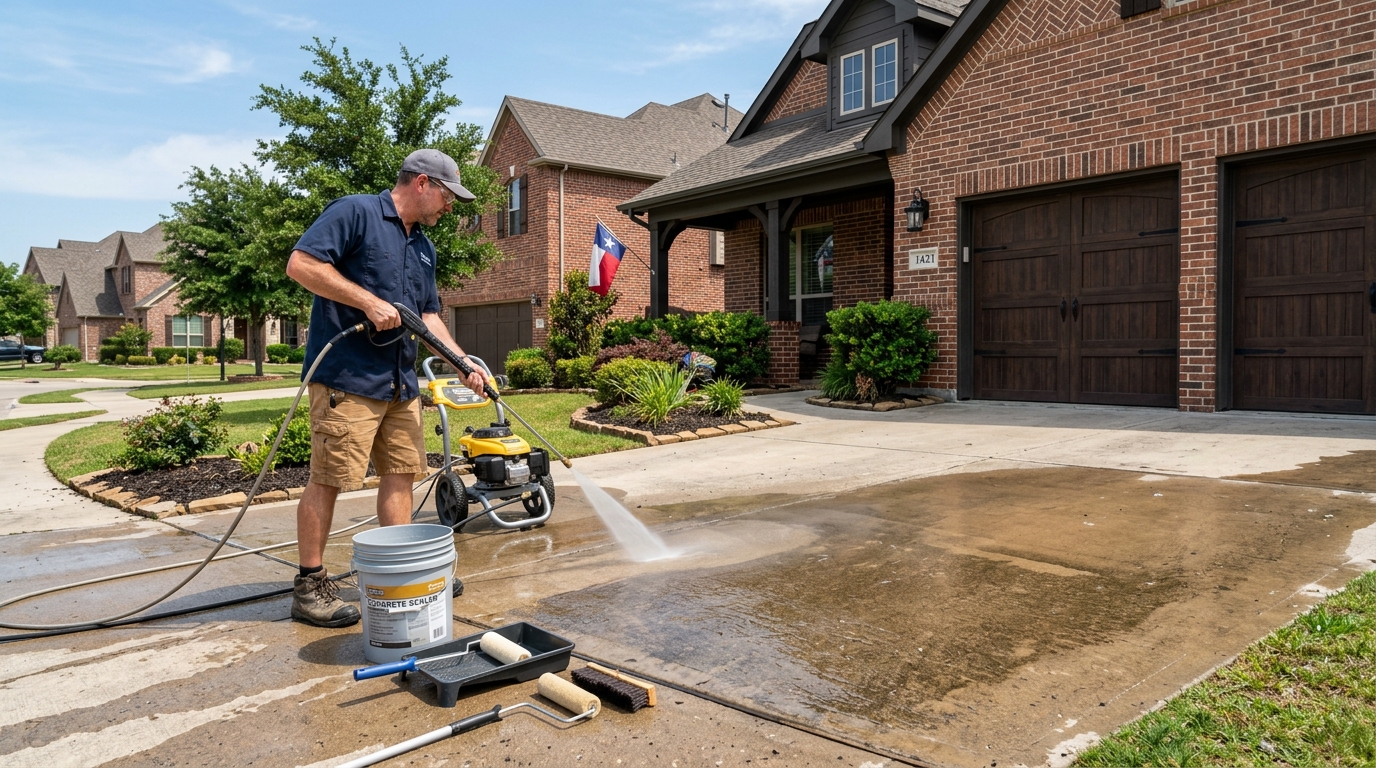
Concrete is one of the most low-maintenance building materials available — but “low maintenance” doesn’t mean “no maintenance.” In the San Antonio area, neglected concrete deteriorates significantly faster than it needs to, and the most common maintenance tasks take less than an afternoon and cost a fraction of the repair bill they prevent.
In this post, we’ll cover a practical maintenance schedule for Timberwood Park concrete, the most important seasonal tasks, and what to watch for that signals a problem is developing.
Call (830) 289-3583 — Free InspectionWhy Maintenance Matters More in Texas Hill Country
Timberwood Park’s combination of triple-digit summers, occasional winter freeze events, and expansive clay soil creates more stress on concrete than most of the country experiences. The good news: a modest maintenance investment extends the life of a properly installed slab significantly.
The failure pattern on neglected concrete here is predictable: summer heat opens hairline cracks, fall rains saturate the clay beneath the slab, a winter cold snap freezes the water in those cracks, and the following spring reveals damage that cost nothing to prevent.
Annual Concrete Maintenance Checklist
Spring (March–April)
- Walk every concrete surface and look for new cracks or displacement since winter
- Fill any hairline cracks with polyurethane crack filler before the next rain season
- Check slab perimeter for soil that has settled against the edge (redirects water under the slab)
- Inspect control joints — if sealant has cracked or separated, refill
- Clean organic debris (leaves, mulch) from low-drainage areas where it holds moisture
Summer (May–August)
- Avoid high-pressure washing in the hottest part of summer — the thermal shock from cold water on hot concrete can contribute to surface stress
- Monitor drainage during thunderstorms — note any areas where water pools on or next to the slab
- Keep vegetation 6–12 inches from concrete edges — roots disrupt sub-base compaction; irrigation saturates clay directly next to the slab
Fall (September–November)
- Best window for resealing — temperatures are stable and below 90°F, which is necessary for sealer to cure properly
- Schedule any crack repair before freeze season
- Clear debris from area drains and channel drains
- If you have expansion joints filled with backer rod and sealant, inspect and refill as needed
Winter (December–February)
- Watch weather forecasts for freeze events after heavy rain — this is the highest-risk scenario for Texas concrete
- If water has been pooling on a surface, correct drainage before the first hard freeze
Sealing: The Highest-Value Maintenance Task
Penetrating sealers (silane/siloxane-based) absorb into the concrete pore structure and reduce water absorption by 90%+. They don’t change the surface appearance and provide the best protection against freeze-thaw damage. Reapply every 2–3 years.
Film-forming sealers (acrylic or polyurethane) sit on the surface, provide color enhancement, and protect against staining. More common on stamped and decorative concrete. Reapply every 1–3 years depending on sun exposure and foot traffic.
Cost: $200–$600 for professional application on a typical driveway or patio. DIY is feasible with rented spray equipment — budget $50–$150 for materials.
Timing: Apply when temperatures are between 50°F and 85°F and rain is not forecast for 24–48 hours. Fall is ideal in the San Antonio area.
Drainage: The Most Overlooked Maintenance Factor
More Timberwood Park concrete failures trace back to drainage problems than to any other single cause. Clay soil doesn’t drain quickly — water that accumulates next to or beneath a slab saturates the soil, maximizes expansion, and then freezes if winter arrives.
Simple drainage maintenance:
- Keep soil graded away from slab edges (6” slope away per 10 feet is the rule of thumb)
- Clean channel drains of debris at least twice yearly
- Note where water runs during rain — if it runs toward the foundation or pools at slab edges, address it before it becomes a structural issue
Crack Repair: Act Early
Hairline cracks (less than 1/16” wide, no displacement) are cosmetic concerns that become structural problems over time. Polyurethane crack filler from any hardware store handles these in 20 minutes. Cost: $10–$20 per tube.
Wider cracks or cracks with displacement need professional evaluation. These indicate soil movement beneath the slab and require understanding the cause before repair will hold. See our guide on signs your concrete needs repair.
Frequently Asked Questions
How do I clean concrete without damaging it?
For most surfaces: a garden hose or low-pressure washing with a concrete cleaner handles routine maintenance. For oil stains, use a degreaser. Avoid acid-based cleaners on sealed concrete and avoid high-pressure washing on decorative finishes — it can strip sealer and erode the surface.
Is it normal for concrete to crack in Texas?
Hairline cracks at control joints are normal and expected — that’s what the joints are for. Random cracks away from joints, displaced cracks, or widening cracks are not normal and should be investigated. Texas clay soil makes concrete more susceptible to crack development than regions with stable soil.
When should I reseal my concrete?
If water no longer beads on the surface — it soaks in instead — it’s time to reseal. For most Timberwood Park driveways and patios, that’s every 2–3 years. Read our guide on how long concrete lasts in Texas for the full maintenance context.
Questions about your specific slab? Call (830) 289-3583 or contact us for a free inspection.
Related posts: