Texas Weather & Your Concrete Driveway in Timberwood Park, TX: Heat, Freezes & What to Expect
Concrete is one of the most durable building materials available — but in Texas Hill Country, it faces a combination of stresses that most of the country doesn’t see. Triple-digit summer heat, sudden winter freezes, and the expansive clay soil under every slab in Timberwood Park all work against even well-built concrete over time.
In this post, we’ll cover the specific ways Texas climate damages concrete, the freeze-thaw failure cycle unique to this region, and what you can do to extend the life of your driveway or patio significantly.
Call (830) 289-3583 — Free Concrete EvaluationWhy Texas Freeze-Thaw Is Different From Northern States
Most concrete education is aimed at northern climates — places where concrete endures dozens of freeze-thaw cycles every winter. Texas gets far fewer cycles, but the pattern here is more damaging per event.
The Texas Hill Country freeze-thaw failure sequence:
- Water from recent rain infiltrates concrete pores and existing hairline cracks
- A rapid cold front drops temperatures below freezing — sometimes 30–40°F in 24 hours
- Water expands approximately 9% as it freezes, creating internal hydraulic pressure
- That pressure widens existing cracks and initiates new ones
- When the thaw comes, the widened cracks admit more water
- The next freeze cycle compounds the damage
Because Texas freezes are infrequent and sudden, homeowners often don’t notice progressive damage until a crack that looked like a hairline last season is now a quarter-inch gap.
Summer Heat: Plastic Shrinkage and Surface Scaling
Triple-digit summers damage concrete in two ways:
Plastic shrinkage cracking occurs when concrete loses surface moisture faster than bleed water rises to replace it. On a 100°F day with low humidity, this can happen within an hour of the pour. The resulting cracks are surface-level but provide the same entry points for water as deeper structural cracks.
Thermal cycling from daily temperature swings — cool nights, hot days — causes gradual concrete expansion and contraction. Over years, this stress concentrates at control joints and edges, widening them and eventually causing spalling.
Clay Soil Movement: The Force Beneath the Slab
In Timberwood Park, the soil itself is a compounding factor. Bexar County’s expansive clay soils swell with moisture and shrink when dry — sometimes dramatically over a single wet-dry cycle. This vertical movement beneath a slab creates differential pressure that can crack even well-reinforced concrete.
Areas with shallow Hill Country limestone present a different problem: drainage over rock creates water channels that undermine poorly graded slabs from below.
Proper drainage design — ensuring water flows away from, not under, the slab — is as important as the concrete mix itself for long-term performance on these soils.
Request Contractor Contact on Concrete Repair or InstallationWhat You Can Do: Maintenance That Actually Works
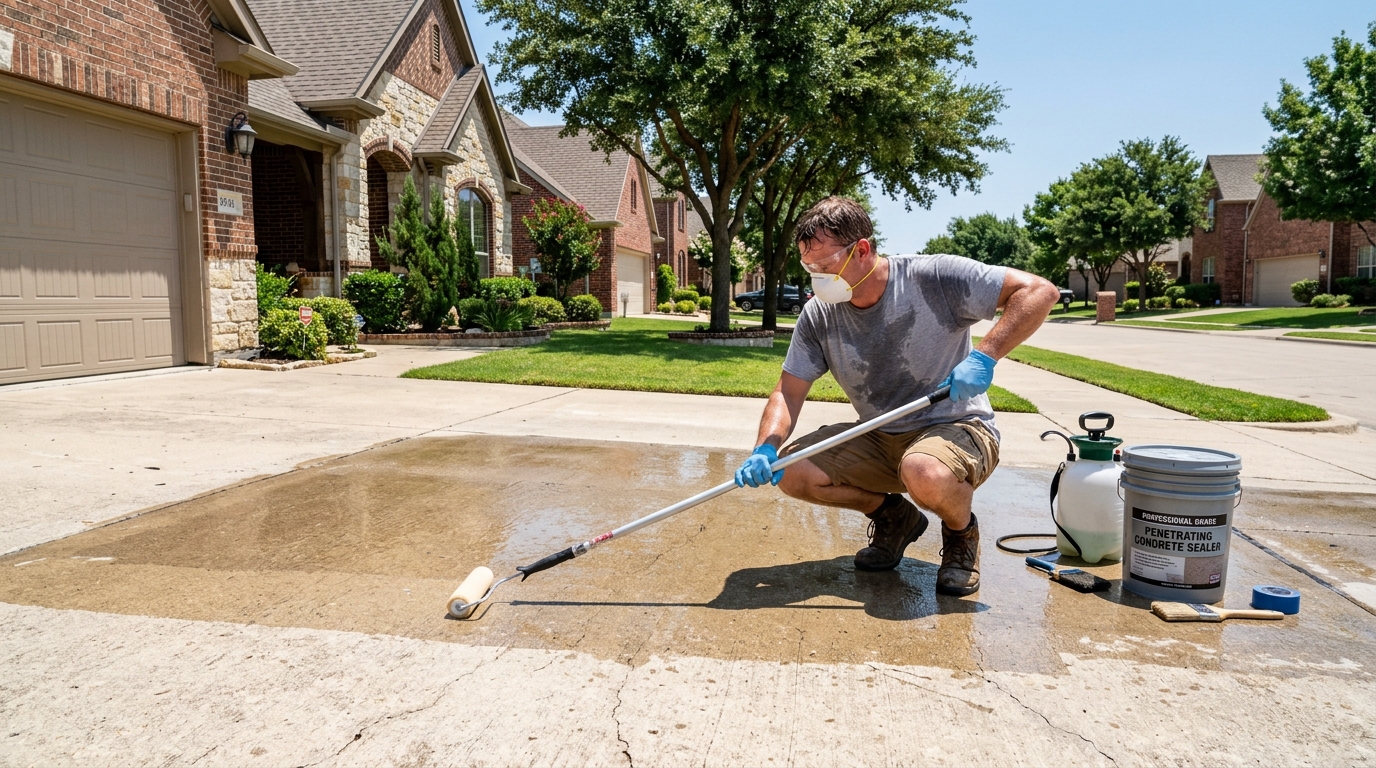
Seal Regularly
A quality penetrating sealer dramatically reduces water absorption into concrete. This is the single most effective defense against freeze-thaw damage and staining. Reseal every 2–3 years; in direct sun, every 2 years. Cost: $200–$600 per treatment depending on surface area.
Check Drainage Every Year
Walk your driveway and patio after a heavy rain. Water that pools at the slab edge or against your foundation is the enemy. Simple re-grading of soil at the perimeter, or adding a channel drain, can extend a slab’s life by years.
Fill Hairline Cracks Promptly
Small cracks become large cracks with one freeze event. Polyurethane crack filler handles most surface cracks inexpensively — a tube runs $10–$20 at any hardware store. Don’t wait. See our post on signs your concrete needs repair.
Use Air-Entrained Concrete for New Pours
When installing new concrete, specify air-entrained concrete — micro-bubbles intentionally introduced into the mix create pressure-relief chambers that reduce freeze-thaw damage. This is standard practice for driveways and flatwork in regions with any freeze risk.
Frequently Asked Questions
How often should I seal my concrete driveway in the San Antonio area?
Every 2–3 years is the industry standard. If your driveway gets direct afternoon sun, err toward every 2 years. If it’s shaded by trees, 3 years is typically adequate. Resealing before you see color fade is easier than restoration after.
Can Texas heat crack a concrete driveway?
Not directly — but it accelerates the failure of existing weak points. Thermal expansion is managed by properly placed control joints. Slabs without adequate joints, or with joints placed too far apart, develop uncontrolled cracks from thermal stress in Texas summers.
How long does concrete last in Texas with proper care?
30–50 years is realistic for a well-built slab with regular sealing and prompt crack repair. Read our full breakdown in how long concrete lasts in Texas.
Discuss site conditions, scope, permits, and scheduling directly with an independent contractor. This website provides project information and referral requests; it does not perform the work.
Related posts: