Best Time to Pour Concrete in South Texas, TX: A Seasonal Guide
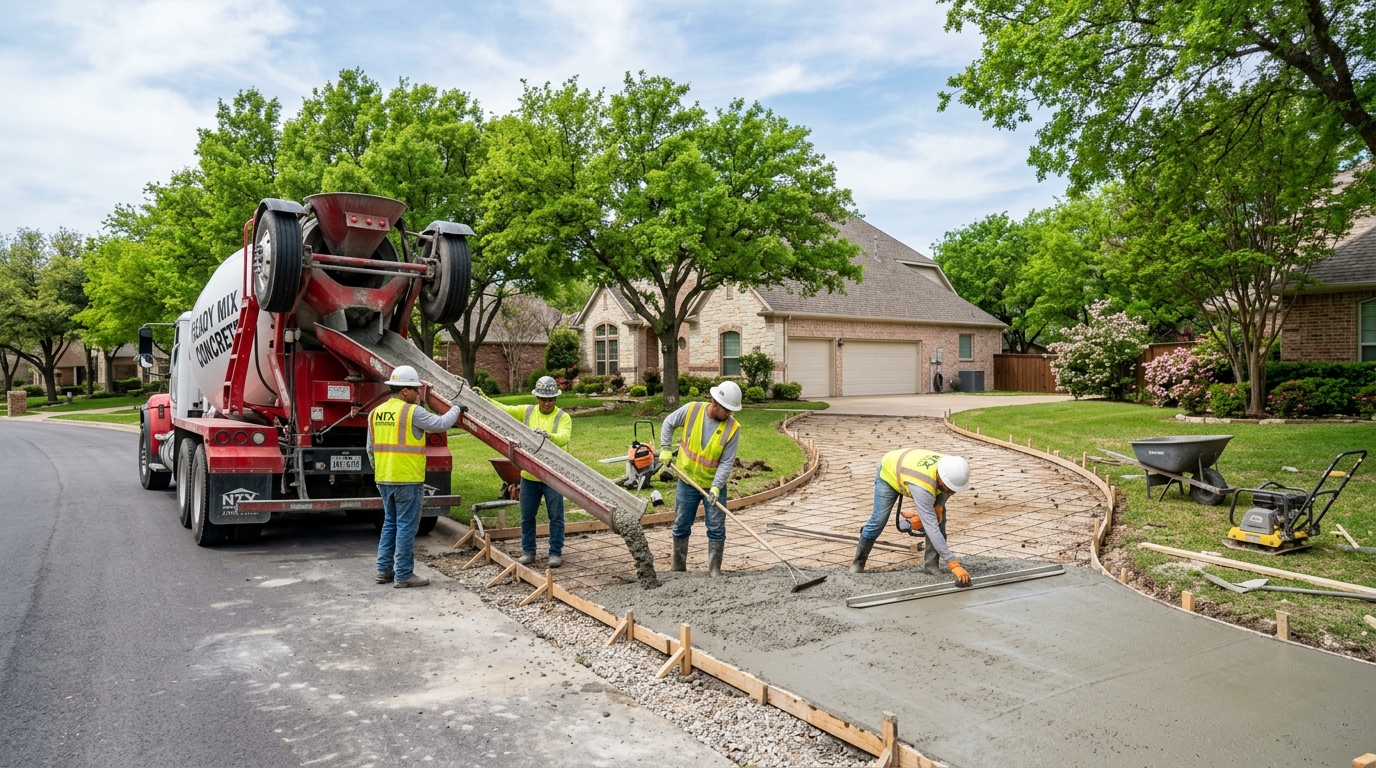
If you’re planning a driveway, patio, or concrete project in Timberwood Park, timing your pour is more important than most homeowners realize. In South Texas, the wrong week can cost you a failed slab — and unlike up north where the main concern is freezing temperatures, the bigger risk here is the opposite extreme.
In this post, we’ll cover the best and worst months for concrete work in the San Antonio area, what happens to concrete in triple-digit heat, winter freeze risk, and how we manage pours in challenging weather.
Call (830) 289-3583 to Schedule Your ProjectWhy Timing Matters More in Texas Than Most States
The American Concrete Institute recommends pouring concrete when temperatures are between 50°F and 75°F. In Timberwood Park, that window opens twice a year — once in spring and once in fall. Outside those windows, contractors have to take active measures to protect the pour.
Texas Hill Country spring weather adds another variable: 30–40°F temperature swings can happen in 24 hours, even during what looked like a safe forecast. A warm afternoon pour can encounter freezing temps by the following morning.
Best Months for Concrete Work in the San Antonio Area
Spring: March, April, May — The preferred window. Temperatures are moderate, freeze risk is low, and afternoon thunderstorms are manageable with a day of advance notice. This is when we book up fastest.
Fall: September, October, November — A close second. Stable temperatures, low humidity, consistent curing conditions. October and November are particularly good months for large projects.
Challenging but Manageable: Summer Pours
June, July, August can still work with the right protocol:
- Schedule the pour for early morning, before sunrise if possible
- Use concrete retarders to slow set time in high heat
- Keep the mixed concrete out of direct sun on the way to the site (insulated trucks help)
- Mist the surface and cover with wet burlap or curing blankets during the cure period
- Avoid pours on days forecast above 90°F without these measures in place
Rapid moisture evaporation in high heat causes plastic shrinkage cracking — visible surface cracks that appear within hours of the pour. Good cure management prevents this.
Winter Risk Window: The Texas Freeze-Thaw Scenario
December, January, February carry a different risk. Our winters are mild by national standards, but sudden cold snaps — 30–40°F drops in 24 hours — happen every year. Fresh concrete that freezes before it cures loses significant strength and may require removal.
The failure scenario is specific:
- Warm soil and a forecasted mild week creates favorable conditions
- A cold front arrives overnight, dropping temps below 32°F
- Water in the fresh concrete freezes, expanding 9% in volume
- Internal cracking occurs throughout the slab
We monitor 10-day forecasts closely for winter pours and use heated enclosures or curing blankets when there’s any freeze risk. In Texas Hill Country, it’s genuinely not worth chasing winter scheduling to save a few weeks of project timeline.
Schedule Your Spring or Fall Project NowHow Long Does Concrete Need to Cure?
Concrete reaches initial set in 24–48 hours (no foot traffic), working strength in 7 days (light vehicle traffic OK), and full rated strength at 28 days. During the cure period, temperature management matters most.
In Texas summers, maintaining moisture at the surface — preventing too-rapid drying — is critical. We mist and cover large slabs as part of standard summer protocol.
Practical Tips for Scheduling Your Project
- Book 4–6 weeks out for spring and fall slots — these fill quickly in the San Antonio area
- Get your permits first — Bexar County driveway permits take 5–10 business days. See our permit guide
- Don’t rush winter work — February is genuinely high-risk; March is just a few weeks away
- Watch the 7-day forecast, not just the date — A “safe” November date can turn dangerous with one cold front
Frequently Asked Questions
Can you pour concrete in the summer in Timberwood Park?
Discuss site conditions, scope, permits, and scheduling directly with an independent contractor. This website provides project information and referral requests; it does not perform the work.
What happens if it rains right after a concrete pour?
Light rain during the cure period can actually help — it maintains surface moisture. Heavy rain before the surface has set can wash out cement and damage the surface. We monitor forecasts carefully and will reschedule if significant rain is expected within 6–8 hours of the pour.
Is winter concrete work possible in San Antonio?
It’s possible but carries risk. We can pour in winter with proper forecast monitoring and cold-weather protection measures. However, we advise clients to plan spring or fall if at all possible — the risk isn’t worth the schedule pressure.
Timing your project right is the first step to a driveway or patio that lasts decades. Call (830) 289-3583 or schedule a consultation online.
Related posts: