Post-Tension Slabs & Expansive Clay Soil in Timberwood Park, TX: What Homeowners Should Know
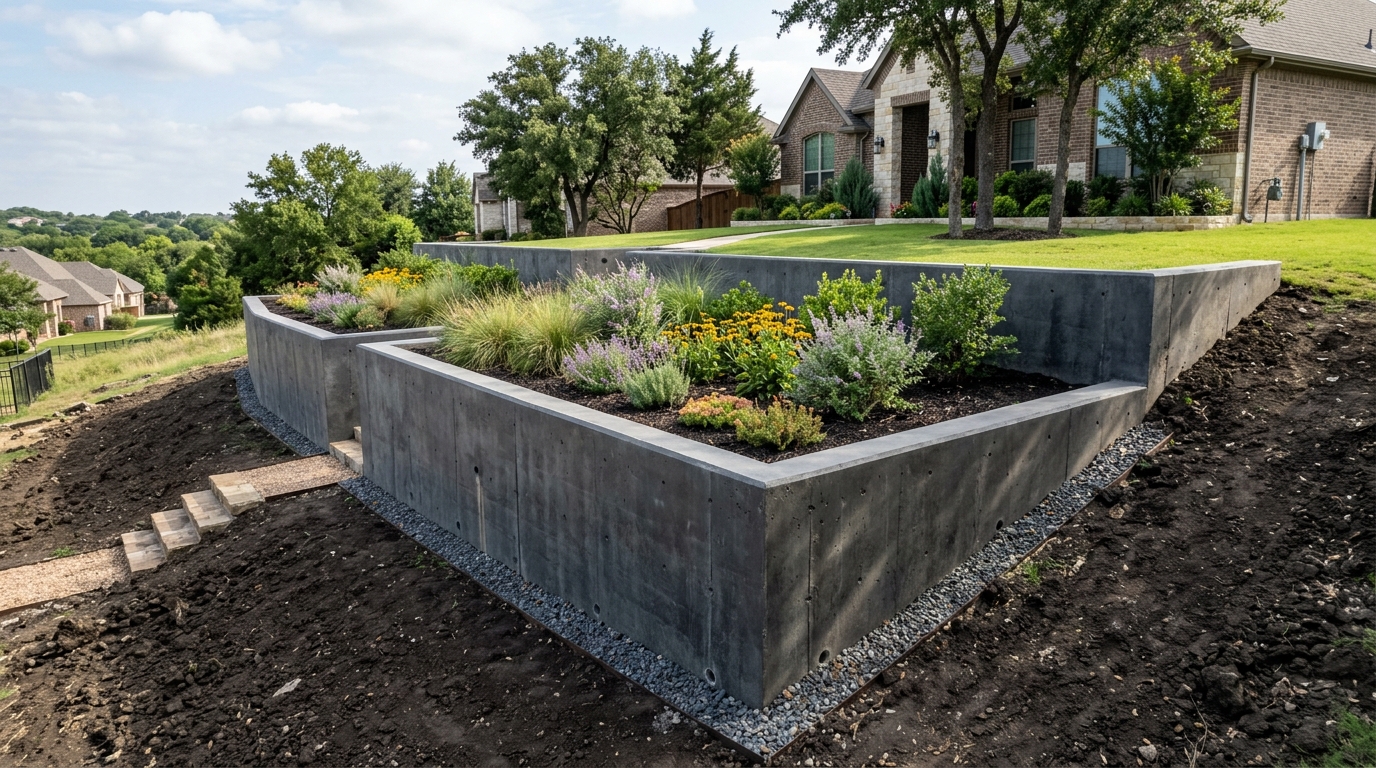
If you’ve spoken with contractors in Timberwood Park about a new concrete slab or foundation, you’ve probably heard the terms “post-tension” or “expansive clay soil.” These aren’t just upsell language — they describe real conditions in this specific community that directly affect how concrete should be engineered here.
In this post, we’ll cover what post-tension slab construction is, why Timberwood Park’s clay soil makes it relevant, and what you should ask any contractor about before they start a slab project on your property.
Call (830) 289-3583 — project requestTimberwood Park’s Soil Problem: Why It Matters for Concrete
Timberwood Park sits at the southern edge of the Texas Hill Country in northern Bexar County. The soil here is predominantly high-plasticity expansive clay — a material that absorbs water and swells significantly when wet, then shrinks and cracks when it dries. This is the fundamental challenge for any concrete work on these lots.
The problem compounds because:
- Soil variability within a single lot is common. You may have clay near the street and shallow limestone ledge near the house — or vice versa. The different materials respond differently to rain and drought, creating differential movement under a single slab.
- High clay content = low permeability. Water doesn’t drain quickly through clay. It sits beneath slabs, saturating the soil and maximizing swell, then drains slowly during dry periods.
- Hill Country limestone creates drainage channels. On lots with shallow rock, water runs over the rock surface rather than percolating, creating concentrated water movement that can undermine slab edges.
What Is a Post-Tension Slab?
A post-tension slab is a concrete slab reinforced with high-strength steel cables (tendons) that are stressed after the concrete cures.
Standard rebar slab: Rebar is passive reinforcement — it resists loads and helps hold cracks together, but doesn’t actively resist soil movement.
Post-tension slab: Cables are threaded through the slab in conduit before the pour. After curing, the cables are tensioned (pulled tight) using hydraulic jacks and locked off. This puts the entire slab under compression — compressive forces the concrete in a state that actively resists cracking when the soil moves beneath it.
In high-movement soil environments like Timberwood Park, post-tension significantly outperforms standard rebar slabs at preventing cracking and displacement. This is why post-tension is the standard recommendation for residential foundations throughout the greater San Antonio area.
When Post-Tension Is Recommended for Flatwork
Post-tension is standard for foundations and larger commercial slabs. For residential driveways and patios, the calculus depends on:
Lot-specific soil conditions. A lot with clay over stable substrate may perform fine with a properly reinforced standard slab. A lot with highly plastic clay over variable depth, or with known drainage challenges, is a candidate for additional reinforcement.
Slab size. Larger pours — long driveways, full rear patio slabs — span more soil variability. The risk of differential movement is higher on a 900 sq ft driveway than a 200 sq ft patio.
Project history. If a previous driveway on the lot cracked and displaced within a few years, that’s a strong signal about the underlying soil behavior.
We evaluate each site individually before recommending the reinforcement approach. Sub-base investigation — digging down to check soil composition and drainage before the pour — is standard practice for us on Timberwood Park projects.
Get a Site-Specific EvaluationDrainage: The Other Half of the Equation
Even the best slab fails faster when drainage is wrong. On Timberwood Park’s clay soil, directing water away from the slab is as important as reinforcement design:
- Grade the perimeter so water flows away from the slab, not toward it
- Install edge drains on uphill sides of driveways where water accumulates
- Avoid vegetation immediately adjacent to slab edges — roots disrupt soil compaction, and plant watering saturates the clay directly next to the concrete
What to Ask Your Contractor
Before signing a contract for any slab work in Timberwood Park, ask:
- “What is your sub-base preparation process?”
- “How deep are you digging to check soil conditions?”
- “Are you using standard rebar, welded wire, or post-tension for this project?”
- “How are you handling drainage at the slab perimeter?”
A contractor who can answer these questions specifically — not generically — understands what this soil environment requires.
Frequently Asked Questions
Are all Timberwood Park driveways on expansive clay?
The expansive clay layer is present throughout most of Timberwood Park, but depth and plasticity vary significantly by lot. Areas closer to the Hill Country’s limestone formations may have shallower clay over rock. Site-specific evaluation is the only way to know what your specific lot requires.
Does a post-tension driveway cost more?
Yes — tensioned cable installation adds cost versus standard rebar. The premium is typically $1–$3 per square foot depending on project scope. For a lot with high clay movement history, it’s a worthwhile investment in a slab that stays flat for 30+ years instead of cracking within 5.
Can clay soil damage a freshly poured slab?
Significant soil movement during or immediately after a pour can damage fresh concrete. This is why we pay attention to soil moisture conditions before pouring — overly saturated clay is an unstable base. We may delay a pour after heavy rainfall until the base dries adequately.
Discuss site conditions, scope, permits, and scheduling directly with an independent contractor. This website provides project information and referral requests; it does not perform the work.
Related posts: